Re-rate against current tables, deliver pre-filled links, and issue updated schedules.
An automated renewal cycle operating on the same calculation engine and document templates as new business. Event triggers, payment links, and policy updates run smoothly without manual spreadsheet exports.
Underwriter oversight with zero repetitive re-keying
Manual renewal processing drains underwriting resources. When teams must manually look up expiring policies, calculate indexation adjustments, and email payment instructions individually, renewal turnaround slows down and retention rates decline.
InsureOS automates renewal evaluation thirty days prior to expiry. For specialised policies like marine policy renewals, the system inspects craft specifications, recalculates premiums against the current active rate version, generates an updated schedule of cover via automated document generation, and triggers customer notifications through event-driven automation.
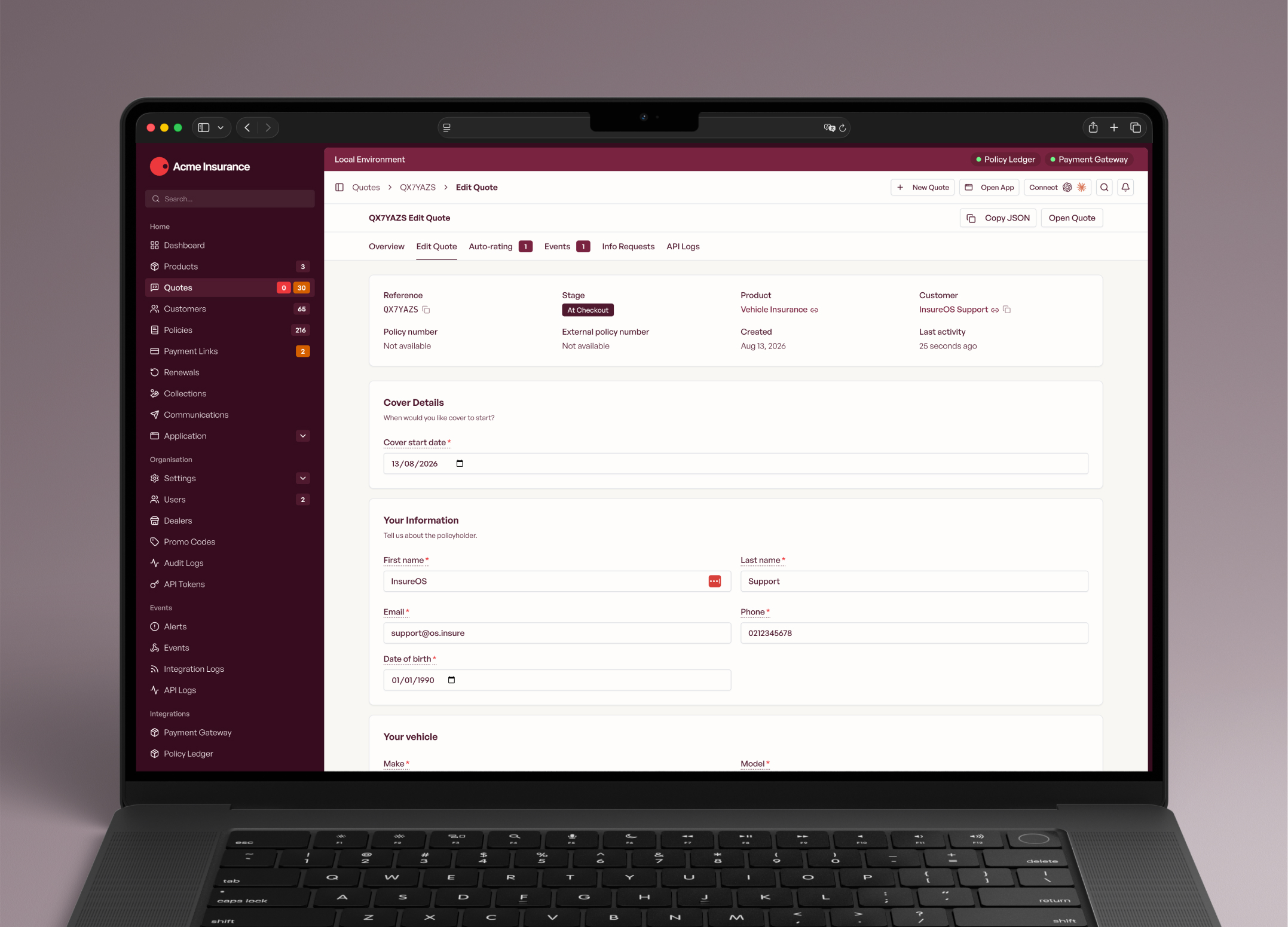
The InsureOS policy editor gives underwriters immediate ability to review automated renewal re-ratings, apply manual factor discounts, and reissue terms.
Deliver secure, personalised renewal links pre-populated with existing schedule details, allowing customers to confirm terms in one click.
02
Automated indexation adjustments
Apply building cost inflation rates or vehicle depreciation curves automatically, presenting accurate valuations on renewal schedules.
03
Real-time ledger updates
Dispatch renewal confirmations, updated policy schedules, and payment settlement records straight to your core administration system.
Convenient payment links
Once the renewal is re-rated, the platform issues a hosted payment link that your customer pays from any device. Card, bank transfer, or premium-funded instalments through the providers you already run. The receipt and updated schedule fire the moment the gateway clears.
Hosted payment link, sent through the channel that suits you
Card, bank transfer, or premium-funded instalments
Receipt and renewal schedule sent on payment clearance
Every step of the renewal flow fires an event. quote.rated when the new premium is calculated, payment.scheduled when an automatic charge is queued, payment.succeeded when the gateway clears, document.generated when the new schedule goes out. Subscribe with webhooks and your stack stays in sync without polling.
How are renewals calculated when rates have changed during the policy term?
Renewals re-rate against the active rating tables effective on the renewal inception date. The expiring policy retains its original calculation trace for historical auditing, while the renewal invitation produces a distinct quote record showing current rating factors.
How do customers complete renewal payment?
The platform generates a unique, authenticated payment link delivered via email or SMS. Policyholders open the link on mobile or desktop, review their pre-filled schedule, adjust coverage options if allowed, and pay via card, direct debit, or premium funding.
How are midterm adjustments processed before policy renewal?
Midterm adjustments evaluate through the same calculation engine as new business. Pro-rata premium calculations execute automatically based on remaining policy days, generating endorsement documents that update the schedule before the next renewal cycle.
Does InsureOS support automated repeat payment charging for renewals?
Yes. Where supported by your payment gateway adapter, tokenised payment methods can be scheduled to charge on the policy renewal date. Customers receive advance notification emails with the scheduled date, amount, and an option to modify terms or opt out.
Can underwriting teams override automated renewal rates?
Yes. Underwriters can review pending renewal queues in the administration portal, apply custom discounts or risk loadings, attach updated policy terms, and reissue the renewal notice with customised pricing before customer delivery.
How do bound renewals synchronise with core policy administration ledgers?
Once renewal payment confirms or direct debit schedules authorise, real-time webhooks dispatch policy renewal events to your back-office core, updating policy status, ledger receipts, and renewal documents in JAVLN, eGlobal, or internal databases.